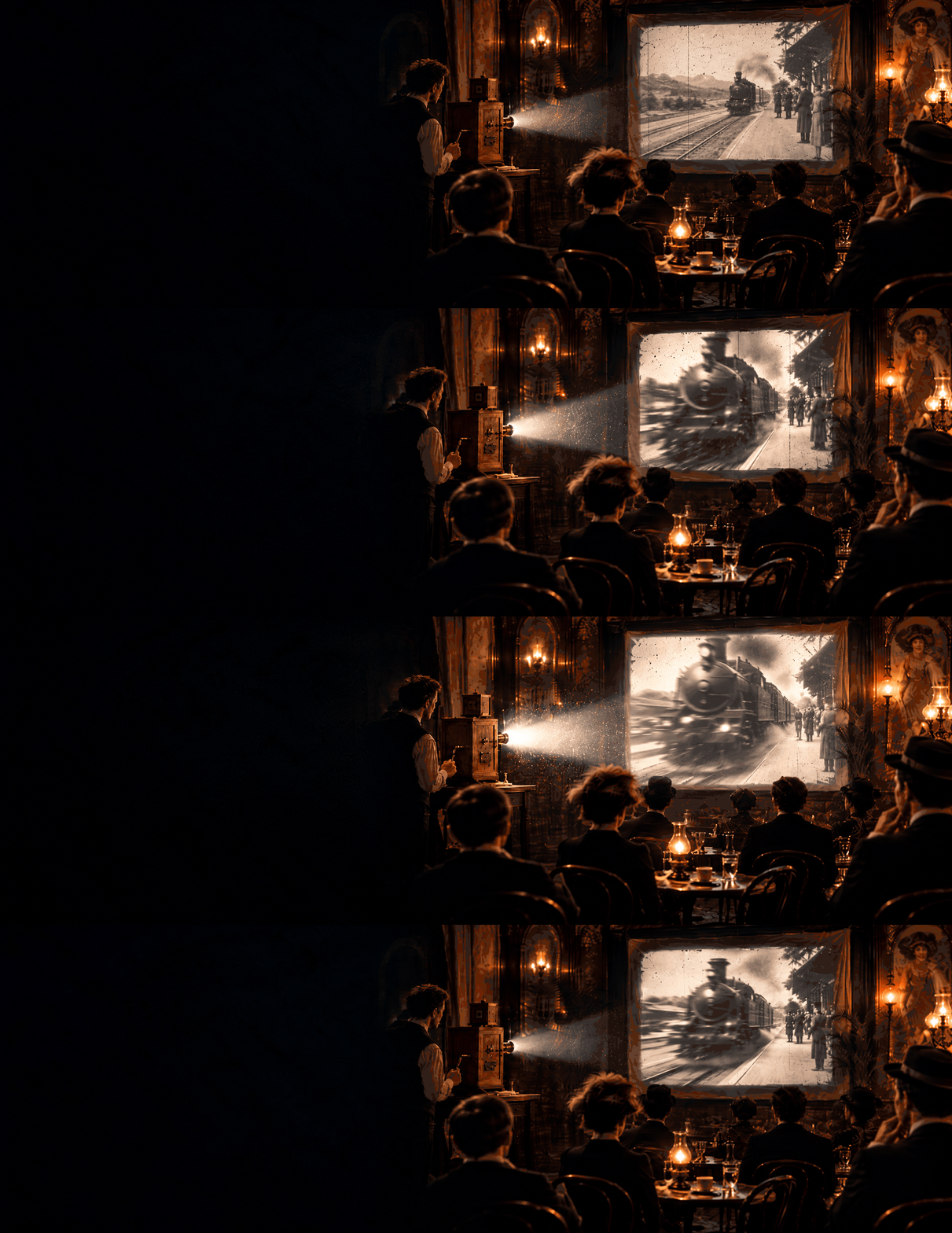
Cycle 2 - The Beginning of Filmmaking.
In this four-class cycle, I introduce the origins of filmmaking through the cultural context of the Industrial Revolution, the development of photography, and the early motion-picture systems associated with Edison, Dickson, and the Lumière brothers. Students then work in pairs to recreate or adapt an early film with a smartphone and fixed tripod before completing an individual summative quiz.
Intro
I am experimenting upon an instrument which does for the eye what the phonograph does for the ear.
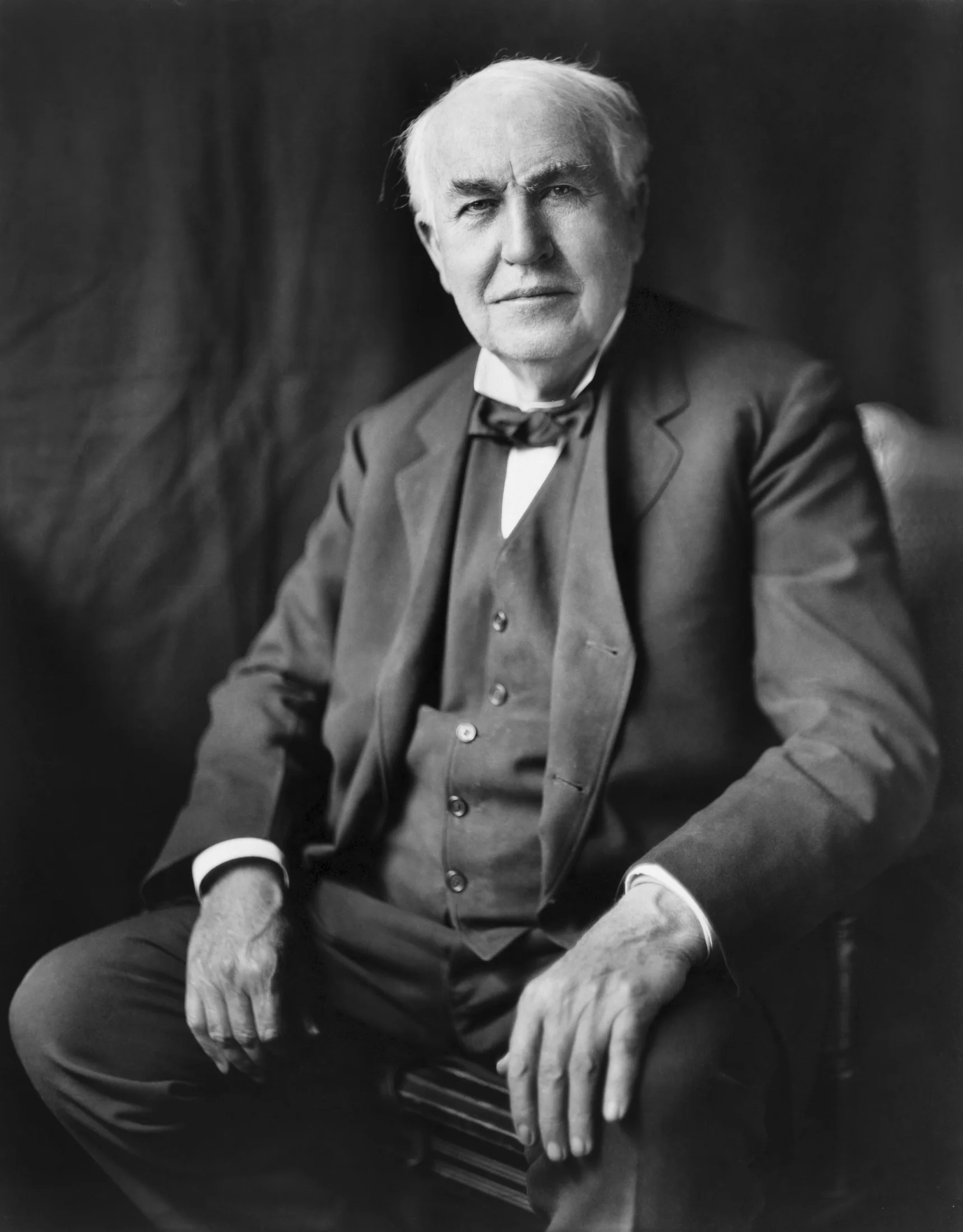
Cycle 2 is where the Timeline-Based Syllabus truly begins. From this point forward, students move through film history in chronological order. They do not encounter that history as a simple list of dates, films, and inventions. Instead, each cycle asks them to consider the problems filmmakers faced, the tools available to them, and the cultural conditions that shaped their choices.
In this first historical cycle, I draw a deliberate parallel between my students and the pioneers of early cinema. Those pioneers had no established filmmaking language to follow. The technologies were new and still developing, and the basic conventions of cinema had not yet been defined. They had to discover what a moving image could do by experimenting with cameras, bodies, spaces, movement, and time.
Some of my students may arrive with an advantage. They may have taken a film course before, edited videos, or already developed an instinct for framing and visual storytelling. For this cycle, however, I treat everyone as a pioneer. They begin with a camera, a fixed frame, a simple action, and a collaborator. Through practice, they start discovering for themselves how filmmakers organise movement, space, time, and meaning.
The opening lecture gives the class the shared historical foundation for this work. I begin with the cultural context of the Industrial Revolution and the late-nineteenth-century world it helped create: factories, railways, growing cities, electric light, scientific experiments, mass production, and new forms of public leisure. I do not present the beginning of cinema as a parade of inventors or as a race won by one person on one date. Film emerged from work carried out across different countries, professions, technologies, and institutions.
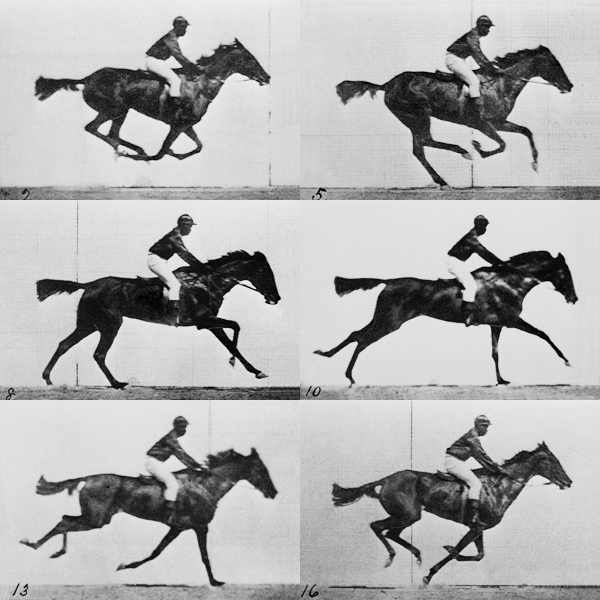
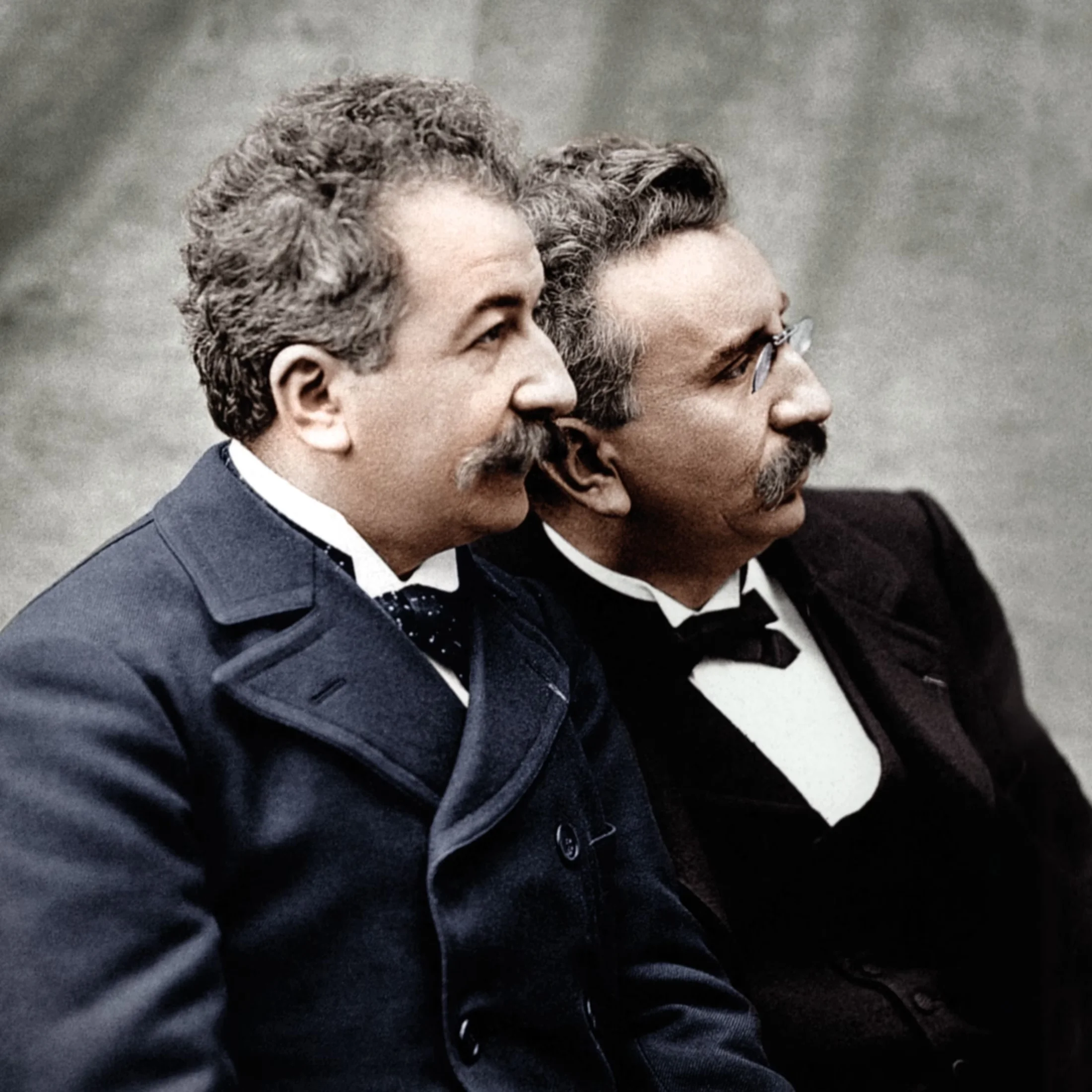
Students then trace several connected developments: photographic exposure and chemistry, shorter exposure times, images recorded in sequence, flexible film stock, mechanisms that moved film intermittently, devices for recording and viewing images, projection, and the social practice of watching moving pictures with an audience. Edison, W. K. L. Dickson, William Heise, the Lumière brothers, and other pioneers enter the story as contributors to a much larger network.
Classes 2 and 3 turn this history into practical action. Students learn to use the basic equipment available to them: a tripod, a secure smartphone mount, and their own phone camera. They work in pairs and receive one of four early films at random. Their task is to recreate or adapt its central idea through one short continuous shot, using a fixed camera with no cuts, zoom, or camera movement. These limits make framing, blocking, timing, performance, entrances and exits, and depth easier to see. They also give students their first opportunity to discover how collaboration shapes what appears inside the frame.
The cycle ends with an individual summative quiz. By then, students should be able to explain the historical and technological conditions that made cinema possible, identify how early filmmakers organised action within a frame, and connect those discoveries to the practical choices they made in their own film.
WHY THIS CYCLE COMES NOW Cycle 1 establishes our class culture. Cycle 2 begins the Timeline-Based Syllabus by placing students alongside cinema’s pioneers. They build their first shared historical foundation, learn a basic equipment routine, and solve their first collaborative filmmaking problem with limited tools and no ready-made solution. |
Cycle Overview
I move from inquiry to action, then reflection. Students first study the conditions that allowed cinema to emerge. They then test early filmmaking constraints with contemporary tools. Finally, they explain what they have learned on their own.
CYCLE IN ONE SENTENCE Students investigate how cinema emerged, use a fixed smartphone camera to work like early filmmakers, and demonstrate their understanding through a short collaborative lab and an individual quiz. |
What I want students to carry forward
• Historical thinking: film forms and technologies develop within cultural contexts shaped by historical, technological, economic, social, and institutional factors.
• Close viewing: even a very short, fixed shot contains decisions about composition, space, time, movement, performance, and audience attention.
• Technical care: a stable setup, secure mount, deliberate frame, clean recording, and verified file are part of filmmaking.
• Collaboration: partners need a shared intention, clear responsibilities, and a way to solve disagreements through the work.
• Evidence: students should support a historical or formal claim with a precise example rather than a general impression.
Essential Questions
• What had to exist—technically, culturally, and socially—before cinema could emerge?
• How did the late-nineteenth-century industrial world shape the production and exhibition of moving images?
• When does a sequence of photographs become a film?
• Why is it more accurate to speak of many beginnings than of one inventor or one birth date?
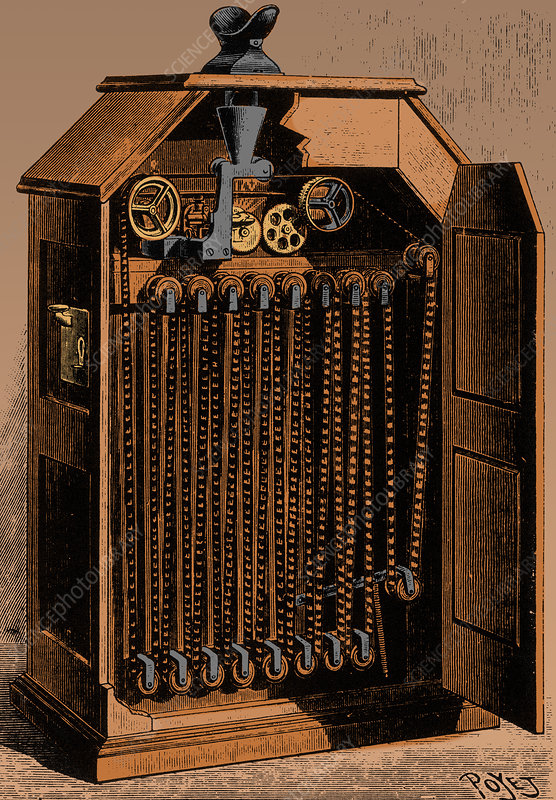
• How did individual viewing through the Kinetoscope differ from collective projected viewing with the Cinématographe?
• What can a fixed camera reveal about framing, depth, timing, movement, and performance?
• How do an actuality—an early non-fiction view of everyday activity—and a staged scene organise reality differently for the camera?
• What does a filmmaker gain (and lose) when editing and camera movement are unavailable?
• How can two people turn a shared intention into clear production decisions?
• How can practical work sharpen our understanding of film history?
Core Components
The lecture as a shared historical map
I keep cameras packed away during Class 1. Students need time to see the sequence of problems that inventors, photographers, engineers, entrepreneurs, performers, and audiences helped solve. The lecture gives us common terms and examples that we will use when the lab begins.
The industrial world around early film
I frame cinema within the cultural context of the Industrial Revolution, especially the late-nineteenth-century industrial world it produced. Mechanised labour, urban growth, rail transport, electric systems, scientific study, standardised manufacturing, and expanding public leisure all affected what could be recorded, how equipment could be built, and where moving images could be seen. This context prevents the lesson from becoming a list of machines detached from the people who made and watched films.
From photographic exposure to moving sequence
Students follow a chain of connected developments: light forms an image; chemistry fixes it; shorter exposures capture movement; sequential photography breaks motion into phases; flexible film carries many images; a mechanism advances and pauses the strip; and a viewing or projection system restores the impression of motion. No single step creates cinema on its own.
Recording, viewing, and exhibition
We compare the Kinetograph and Kinetoscope system associated with the Edison laboratory—including W. K. L. Dickson and William Heise—with the lighter Cinématographe and public programmes associated with Auguste and Louis Lumière. The useful question is not simply who arrived first. It is how each system shaped production, access, spectatorship, and the kinds of scenes filmmakers chose to record.
Close viewing of very short films
These selected one-shot films help students slow down. Because the examples rely on a sustained fixed shot, students can study where the camera sits, what enters and exits the frame, how bodies and objects move through depth, how a gag develops, and how shot duration controls expectation. This is our first sustained practice in connecting observation to a claim.
Basic equipment and workflow
The practical equipment is intentionally simple: a tripod, a secure smartphone mount, and a phone camera. I teach safe setup and pack-down, stability, framing, focus and exposure control where the device allows it, recording, file naming, transfer, and playback verification. The goal is not technical mastery. It is a reliable first routine that makes deliberate choices possible.
I also use this cycle to introduce our equipment checkout procedure. Students learn how to receive and inspect the equipment, confirm that every component is present, sign it out, carry and set it up safely, report any problem, and return everything to its correct place. This procedure is part of the filmmaking process, not an administrative detail.
Collaboration through a constrained task
Pairs have to agree on the core action, choose a location, organise bodies and props, rehearse timing, and check the result together. Because the camera remains fixed, the results of their collaboration become visible inside the frame. Students learn that shared responsibility does not mean that both people do the same job at every moment; it means that both understand and support the same intention.
Inquiry, action, reflection
The cycle follows a pattern I will return to throughout the course. Students ask how and why a film practice developed, test an idea through making, then use evidence from the result to refine their understanding. History and production are not separate tracks here. Each helps students see the other more clearly.
Assessment Focus
This cycle has two assessment points with different purposes. The recreation lab is low-stakes and collaborative. The quiz is the individual cycle summative assessment.
Early Cinema Recreation Lab
This is a low-stakes collaborative assessment completed in pairs. Each pair works with one assigned early film.
I look for a clear fixed frame, readable action, purposeful blocking and timing, responsible technical workflow, equipment care, and a shared explanation of the pair’s choices.
The lab gives students their first practical evidence for feedback in this cycle. It allows me to see how they apply historical ideas, work with a collaborator, and follow the equipment checkout and production procedures.
Origins of Cinema Quiz
This is an individual assessment and serves as the cycle summative assessment.
I look for accurate chronology and concepts, an understanding of the cultural and technological contexts surrounding early cinema, comparison of systems or filmmaking practices, equipment and media fundamentals, and the ability to apply this knowledge to a film example.
The quiz allows each student to demonstrate what they understand independently after the lecture, close viewing, equipment introduction, and collaborative lab.
What the lab is—and is not
I use the lab to make thinking visible. Students do not need costumes, a polished set, or an exact copy of every historical detail. They need to identify the source film's organising idea and recreate or adapt it through framing, mise-en-scène, blocking, timing, entrances and exits, performance, and depth. The restrictions apply only to this exercise; they do not define all early cinema.
What the quiz should reveal
The quiz should ask students to do more than recall names and dates. At least one item should require them to connect a technical or cultural condition to a filmmaking practice, and at least one should ask them to explain how film elements organise action in a short example.
Class Sequence
| DAY | SESSION | TYPE | STRAND |
|---|---|---|---|
| 01 | Cycle 2 - Class 1 - The Beginning Lecture | Lecture | |
Early Cinema | |||
| 01 | Cycle 2 - Class 2 & 3 - Early Cinema Re-Creation Lab | Lab | Early Cinema |
Beginning | |||
| 01 | Cycle 2 - Class 4 - The Beginning Summative Assessment | Quiz | Beginning |
Classroom Activities
Begin by screening the completed lab films. After each film, lead a brief evidence-based discussion of one successful choice and one useful next step, focusing on framing, blocking, depth, timing, entrances and exits, or performance.
Keep the screening and feedback focused so that students have enough time for the quiz. Once the review is complete, begin the assessment and keep the task individual.
Balance precise recall with short explanations, comparison, and application to a film example.
If time remains after collection, return to the opening question and ask how the class definition of film has changed.
Assessments
Early Cinema Recreation Lab — low-stakes collaborative practice
Each pair recreates or adapts one assigned early film. The final shot lasts approximately 30–60 seconds and follows the lab rules: one continuous take, fixed camera, no cuts, no zoom, and no camera movement. Students may simplify setting, props, and costume, but the source film's organising action should remain recognisable.
The submission package is small: the selected clip, one representative screenshot, and a shared two-paragraph filmmaker statement. Paragraph 1 explains the source film's core idea, the pair's adaptation and filmmaker intention. Paragraph 2 uses the screenshot to explain at least two composition choices. The current lab rubric addresses five areas: Core Idea & Early Cinema Style; Composition & Blocking; Technical Execution; Filmmaker Intention & Creative Adaptation; and Collaboration & Equipment Care.
ASSESSMENT PRINCIPLE The restrictions reduce technical distractions. They let me see whether students can organise space and time inside one frame—and whether they can explain why their choices work. |
Origins of Cinema Quiz — individual cycle summative assessment
The quiz is a 55-minute, 40-mark individual cycle summative assessment. Composition is the main focus, accounting for 28 of the 40 marks. Historical knowledge provides the foundation, but students mainly demonstrate how well they can observe, analyse, compare, and rethink the organisation of images.
The assessment uses chronological sequencing and written responses. When analysing an image, students should move from a precise observation to an appropriate film term, then explain the effect or meaning created.
History and systems (12 marks): Students place five developments in chronological order, explain which practical filmmaking problems selected developments helped solve, and explain why cinema has many beginnings rather than one inventor or birth date.
Reading composition in early cinema (12 marks): Using a frame from Workers Leaving the Lumière Factory, students examine foreground, middle ground, and background. They analyse camera position, the factory gate, the placement of people, and how movement changes the composition over time. They also connect one visible feature to a historical or technical condition that shaped the Cinématographe system.
Composition and meaning (8 marks): Using an image from Nosferatu, students identify two composition choices and explain how they guide attention and create a precise effect. They then propose a purposeful change to the framing or blocking and predict how it would alter the viewer’s reading.
Comparison and synthesis (8 marks): Students compare images from Nosferatu and The General through diagonals, subject placement, scale, depth, or negative space. They conclude by explaining why composition becomes especially important when a filmmaker works with a fixed camera and no cuts, supporting the answer with visual evidence and an idea from early cinema history.
Equipment checkout, handling, file naming, transfer, and playback verification are assessed through the practical lab rather than through this quiz.
Reflection & Growth
By the end of the cycle, I want students to see film history as a record of practical problems and solutions. Filmmakers worked through materials, machines, bodies, spaces, businesses, and audiences. The lab gives students a small version of those problems, and the quiz asks them to make the connections explicit.
Questions for students
• Which restriction shaped your pair's decisions most, and what did it make you notice?
• Where does the audience look first in your shot, and what guides that attention?
• How did blocking or timing change between your first rehearsal and the selected take?
• What did your partner notice that you did not?
• What does your recreation help you understand about the source film that viewing alone did not?
• Which technical, cultural, or social condition was most necessary for cinema to emerge? Defend your choice.
Evidence of growth
Growth appears when students move from “the camera just watched” to a precise account of where it was placed, what the frame included, how action was timed, and how viewers were guided. It also appears when partners can name a shared intention and explain how they divided responsibility without losing that intention.
Connections to IB Final Assessments
Cycle 2 plants the first seeds of IB assessment by making evidence part of every activity. Students learn that an observation, interpretation, or creative intention needs support. That support might come from a detail in a frame, a composition choice, a historical condition, a production decision, or the visible result of their work. From the beginning, I ask them to connect intention, action, and evidence.
Textual Analysis
Students closely examine how framing, mise-en-scène, movement, performance, blocking, depth, and time create meaning within a cultural context. They learn to begin with precise visual evidence, identify the relevant film element, and explain the effect or meaning it creates.
The composition quiz reinforces this method. Students cannot rely on general statements such as “the image is dramatic.” They need to identify what is visible, name the composition choice, and explain how that choice guides attention or shapes the viewer’s response.
Comparative Study
Students begin comparing technologies, exhibition systems, spectatorship, and filmmaking practices through specific evidence. They consider how individual Kinetoscope viewing differed from collective Cinématographe projection and how Edison laboratory films organised action differently from selected Lumière films.
The quiz extends this habit by asking students to compare two compositions. A strong comparison identifies evidence from both images, establishes a clear similarity or difference, and explains how each choice produces a different effect.
Film Portfolio
The recreation lab introduces students to the relationship between filmmaker intention, practical decisions, and visible results. They make choices about camera setup, composition, framing, blocking, performance, timing, and movement within a fixed shot.
The clip provides evidence of what the pair created. The screenshot allows students to isolate and discuss specific composition choices. The filmmaker statement asks them to explain their intention and show how that intention appears in the finished image. Students therefore begin learning that an intention becomes meaningful when they can connect it to clear evidence from their own work.
Collaborative Film Project (HL)
Working in pairs introduces shared intention, communication, responsibility, equipment care, and reflection. Students need to explain not only what they created but also how their collaboration shaped the result.
Evidence of collaboration appears in their planning, division of responsibilities, handling of equipment, problem-solving, shared filmmaker statement, and final shot. Both partners should be able to explain the pair’s intention and identify how their decisions contributed to the completed film.
IB ALIGNMENT The central habit begins here. Claims need evidence, filmmaker intentions need visible results, and reflection needs to refer to specific decisions and outcomes. Students will return to this relationship throughout every later cycle and IB assessment |
Further Reading
I use these sources to check chronology, deepen the lecture, and connect historical claims to surviving objects and films.
Archive and museum sources
• Library of Congress: Origins of Motion Pictures — a concise account of the Edison laboratory's technical development.
• Library of Congress: Early Motion Picture Productions — production context and access to early Edison films.
• Harry Ransom Center: The First Photograph — Niépce's heliograph and the problem of fixing a photographic image.
• Smithsonian: Eadweard Muybridge — sequential photography and the study of motion.
• Institut Lumière: Musée Lumière — the Lumière family, the Cinématographe, and the Lyon sites connected to the films.
• BFI: The origins of cinema — a wider view of inventors and pioneers beyond a single national story.
Teacher’s Notes
A Paris Perspective
Inevitably, I approach this cycle with a slight Paris bias. I have lived here for more than a decade, and Paris is one of the cities central to cinema’s emergence as a public experience. What interests me most about the Lumière model is its social impact. Projection turned film into something people could experience together, in the same room and at the same time.
I still avoid presenting cinema as the invention of one person, company, or country. Several technologies developed at roughly the same time, through the work of many inventors and technicians. When discussing Edison, I give specific attention to W. K. L. Dickson and William Heise, whose contributions can easily disappear behind Edison’s name.
The comparison is not about choosing a winner. Many early Edison films used the controlled space of the Black Maria to record short staged acts and performances for individual Kinetoscope viewing. The Lumière Cinématographe supported another model: collective projection, portable recording, exterior locations, and operators who travelled around the world. This contrast helps students see how equipment, location, purpose, and spectatorship influence the kinds of films people make.
Establishing the Course Pattern
This cycle lays the foundations for the rest of the timeline-based syllabus. It establishes a pattern that will return throughout the course. We begin with a lecture that places a film movement, technology, or formal development within its historical and cultural context. Students then spend two classes applying part of that history through practical work. The cycle ends with an individual summative assessment, usually a quiz, that asks them to connect knowledge, evidence, and filmmaking choices.
The pioneer lab makes this structure concrete. Early filmmakers were working with a new technology and had no established filmmaking language to follow. I ask students to approach their first production from a similar position. Within clear limits, including a fixed camera, one short take, no editing, and no camera movement, they must discover how composition, blocking, timing, performance, and collaboration can make an image work. Every choice should leave visible evidence of their intention.
The One Date I Ask Them to Remember
I do not normally ask students to memorise lists of names and dates. In this cycle, however, I make one exception, partly for the pleasure of teaching the course in Paris. I ask them to remember 28 December 1895, when the Lumière company presented its landmark first public paid Cinématographe programme at the Salon Indien of the Grand Café in Paris. The audience numbered 33 people, and Georges Méliès was among them.
This detail creates a direct bridge to the next cycle. One of the spectators at this early collective film experience would soon become one of cinema’s great pioneers and will receive a cycle of his own.