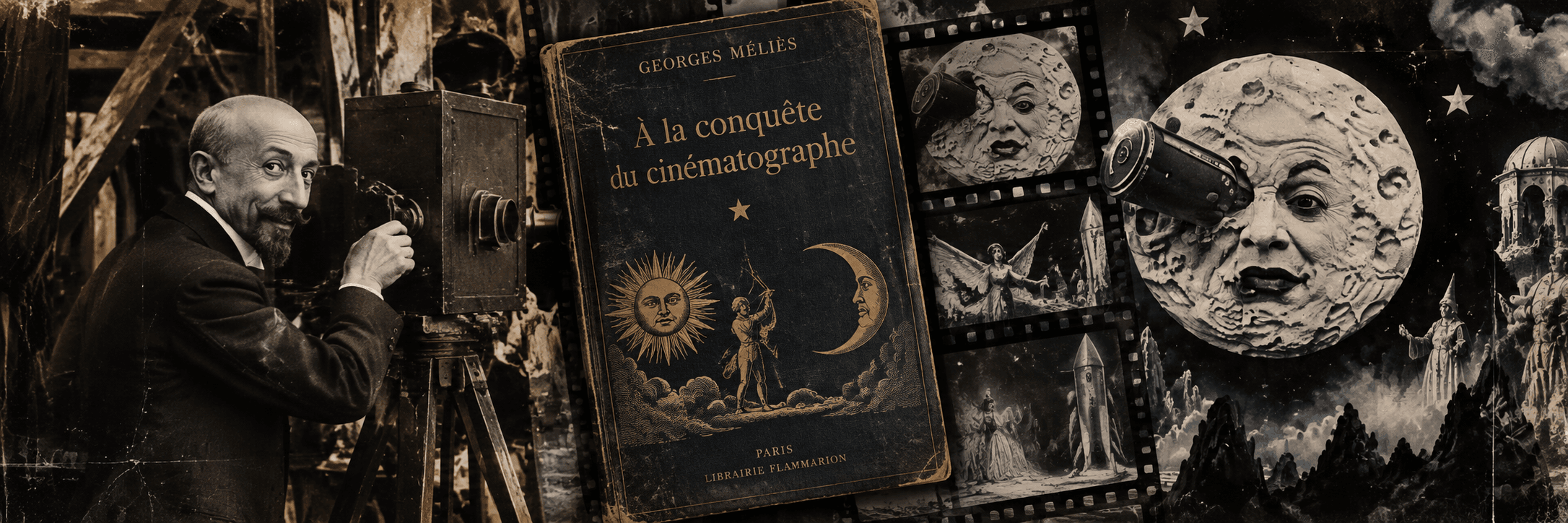
Cycle 3 - Méliès, The Cinemagician.
n this four-class cycle, students explore how Georges Méliès transformed early cinema from a medium that recorded reality into one capable of creating fantasy, illusion, and impossible worlds. Through A Trip to the Moon (1902), basic editing techniques, and a Méliès-inspired production lab, students begin to understand editing as a creative film element used to shape meaning, time, space, and visual storytelling.
Intro
The inventor’s life is not all sweetness and light!
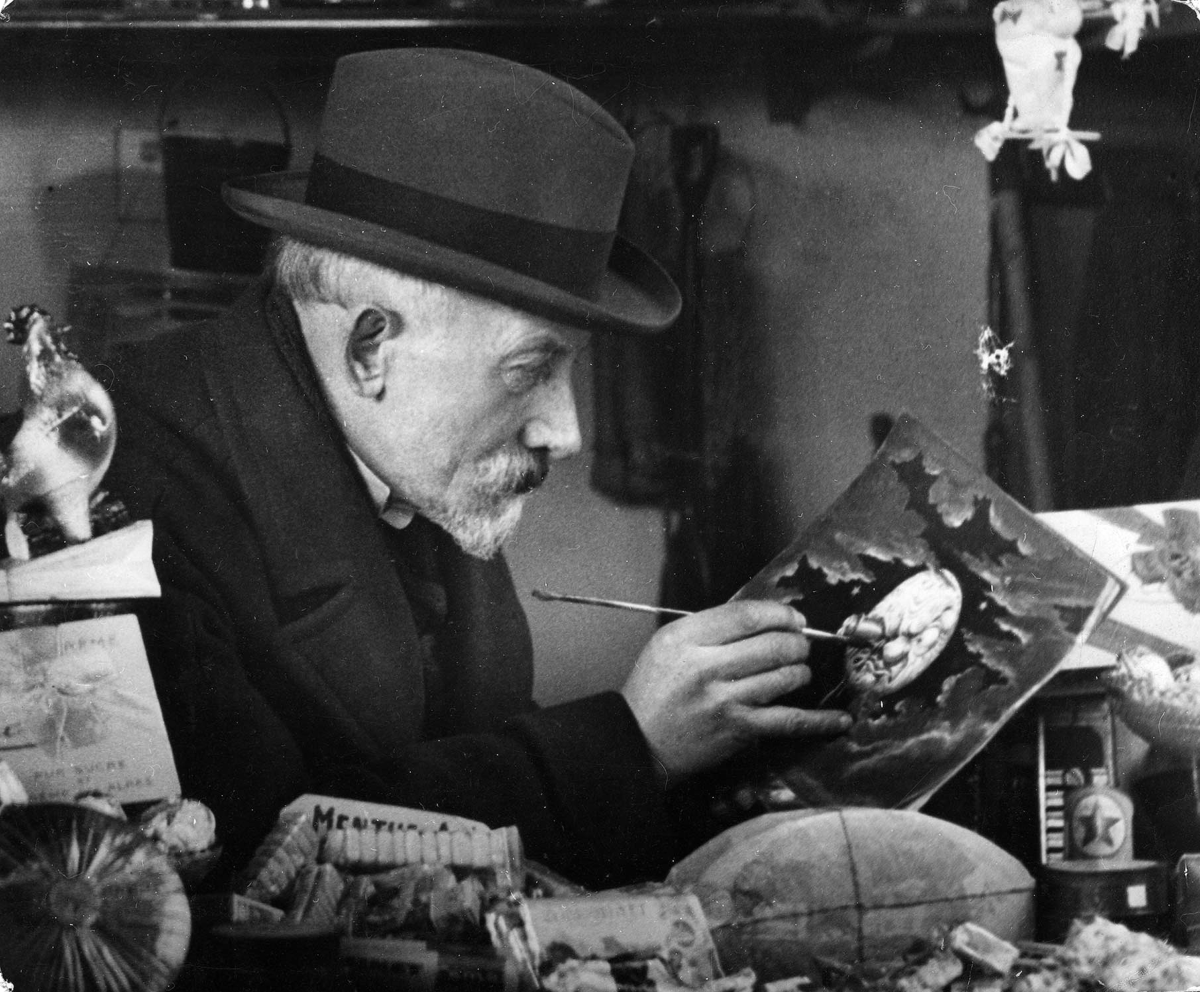
Cycle 3 introduces Georges Méliès as a filmmaker who helped reveal a new possibility of cinema: the screen could show things that never happened in front of the camera.
His films use transformation, theatrical staging, visual trickery, and editing to create impossible events. For students, this makes Méliès an ideal entry point into one of the most important ideas in filmmaking: a film does not simply record reality; it constructs an experience for the audience.
This cycle also introduces editing as a creative film element. Students begin to see that cuts, dissolves, and superimpositions can do more than connect shots. They can alter time, space, continuity, identity, and even the laws of reality.
The larger principle is simple: technique becomes meaningful when it serves an intention. The goal is not to collect effects, but to understand why a filmmaker chooses one.
Cycle Overview
Across four classes, students move from historical study to practical filmmaking.
The cycle begins with Georges Méliès, his background in theatre and stage magic, and the development of his distinctive approach to early cinema. Students examine some of his films and if we have time, we watch A Trip to the Moon (1902) and shorter trick films, paying particular attention to mise-en-scène, performance, composition, spectacle, and early editing techniques.
The second class moves into practical preparation. Students review framing, shot types, rule of thirds, proxemics, and basic editing before planning a short Méliès-inspired film. Working in production teams, they develop a simple concept, establish a clear filmmaking intention, and prepare a storyboard or shot list.
The third class focuses on production and post-production. Students create a short film using three techniques explored during the cycle: stop-edit, dissolve or fade, and double exposure or superimposition.
The final class brings the work together through screening, reflection, maybe a short cycle quiz, and a Film of the Week response connected to Hugo (2011).
By the end of the cycle, students will have connected early film history with contemporary filmmaking practice and taken their first focused steps into editing as a creative role.
This version should read much better on the site: the Intro gives the intellectual hook, while the Overview gives the roadmap.
Essential Questions
What changes when film stops only recording the world and begins constructing it?
How can editing create an event that never happened continuously in front of the camera?
When does a technical trick become a meaningful film choice?
How do framing, mise-en-scène, performance, and editing work together to create illusion?
What can a filmmaker achieve with limited technology when the intention is clear?
(FoW) Which scene from Hugo (2011) best represents the film as a whole, and which film elements make that scene especially significant?
Class Sequence
| DAY | SESSION | TYPE | STRAND |
|---|---|---|---|
Pioneers | |||
| 01 | Cycle 3 - Class 1 - Méliès The Cinemagician | Lecture | Pioneers |
Editing | |||
| 01 | Cycle 3 - Class 2, 3 & 4- Méliès Lab | Lab | Editing |